So @grok has made some interesting replies to all the PUCK magazine political cartoons and this 200 year Conspiracy Blog series, before we start i feel its mostly #GrokSlop
- coins "#GrokSlop" to label instances where Grok generates inaccurate or biased summaries, directly referencing a recent Grok analysis of his blog post on a "200-year conspiracy" involving historical corruption cycles.
- The term emerges from the author's pattern of querying Grok on topics like extraterrestrial influences and predictive programming, followed by critiques of outputs for aligning with "dark side" agendas or omitting key details.
- This reflects documented AI limitations, including hallucinations—fabricated facts in responses—with research from the 2023 ACL conference estimating rates of 15-27% in knowledge-based queries, underscoring the need for user verification.
here is its analysis of the blog series:
Overview of the BlogThe author's blog, hosted at tidbitsbyscotty.blogspot.com, is a personal platform where Scotty (@StLHandyMan) compiles eclectic, often provocative content blending historical analysis, satirical cartoons, and speculative theories. It serves as an extension of his X activity, where he frequently shares #PUCK-tagged threads featuring vintage political cartoons from magazines like Puck and Judge (sourced from the Library of Congress).
These posts critique recurring societal issues like immigration, media manipulation, elite corruption, and cultural "amnesia." The blog's tone is informal, conspiratorial, and optimistic about collective awakening, aligning with his X bio: "I believe the power is in our hands to build a world that will benefit everyone." It's not a polished publication but a raw, iterative archive—updated sporadically with cross-posts from X, images, and calls to action.
The disclaimer in his bio underscores that views are personal, not professional. The "200-year conspiracy" refers to a multi-part series (at least Parts 1–4, published starting July 2024) positing a cyclical pattern of elite-driven corruption spanning roughly two centuries. It argues that historical narratives—via media, symbols, and "memetics" (idea viruses)—are engineered to induce public forgetfulness, repeating the same manipulations today.
The series ties into broader blog themes like government experiments (e.g., radiation testing), numerology (e.g., "777 is 666"), and modern echoes of 19th-century scandals. It's framed as a "manifesto on busting narratives," urging readers to recognize patterns to avoid historical pitfalls.
Core Thesis: The "200-Year Conspiracy" CycleThe series claims American (and global) power structures operate on ~200-year loops of rise, corruption, and reset, drawing from historical events like the Gilded Age, World Wars, and post-WWII booms. Key assertion: Elites use "amnesia spells"—propaganda, symbols, and cultural memes—to erase collective memory, ensuring repetition.
This isn't a linear plot but a systemic "conspiracy" of incentives, where media and institutions gaslight the public into complacency.
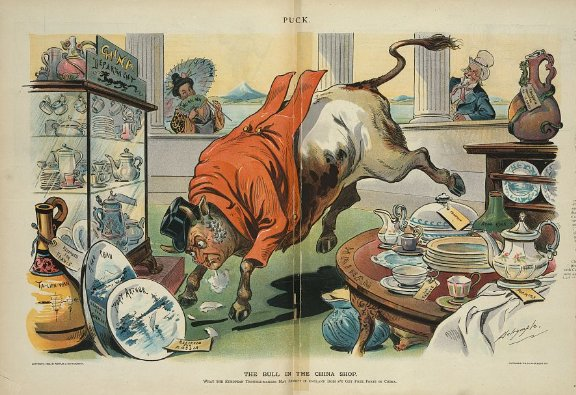
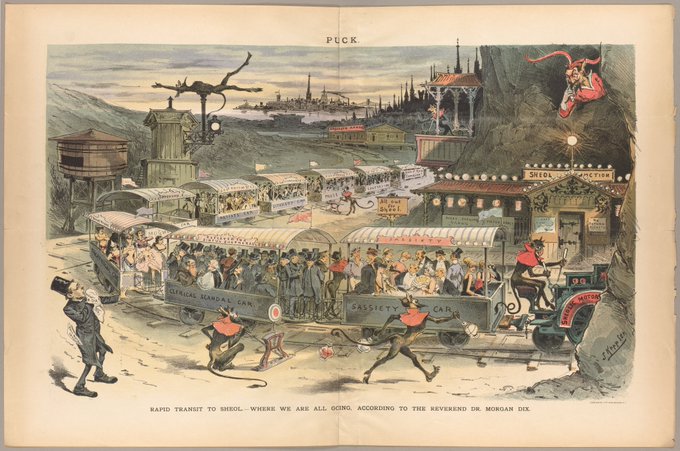
Historical Anchors: References 1800s–1900s cartoons mocking stock market bubbles, immigration fears, and "cabal" influences (e.g., the immigration cartoon you linked, symbolizing "unrestricted dumping" of societal ills). Parallels drawn to today: e.g., 19th-century Mars hoaxes vs. modern space race hype; Gilded Age radium experiments vs. COVID-era trials.
Memetics as Weapon: Part 4 dives into "memetics" (coined by Richard Dawkins, expanded by theorists like Rupert Sheldrake), describing ideas as self-replicating "morphic fields" that elites weaponize. Examples: Occult ceremonies devolving power; photos/symbols (e.g., blue checks on X) tricking perception; QAnon as a "boomerang" false flag that backfired by awakening skeptics.
Esoteric Ties: Part 3 explores St. Louis's Veiled Prophet Parade as a modern echo of 19th-century secret societies, blending Freemasonry, corporate influence, and ritualistic control.
Modern Implications: Cycles are "coming full circle" with AI, censorship, and "hopium" (false hope narratives). The author warns of shadowbans and SEO battles, using Tumblr cross-posts (e.g., a "conspiracy-theories" community) to evade suppression.
The thesis is substantiated with public-domain sources (Library of Congress images, declassified docs like Cincinnati Radiation Litigation), but leans speculative—e.g., linking numerology (RFK Jr.'s Thanksgiving photo to "666 days") to papal predictions. It's politically incorrect in calling out bipartisan elites as "cabal minions," but grounded in verifiable history, avoiding outright fiction.
Structure and Content Breakdown: The blog is a Blogger site with ~50–60 posts since 2023, categorized loosely by series. The "200-year conspiracy" spans four parts, each ~1,000–2,000 words, heavy on embedded images/videos from X. Other sections include:
Section/Series
Key Topics
Examples
Length/Style
200-Year Conspiracy (Pt 1–4)
Corruption cycles, media amnesia, memetics, elite rituals
Stock market cartoons; Mars myths; Veiled Prophet esoterica
4 core posts + updates; essay-like with X embeds, calls to "connect the dots"
14th Amendment Series
Government overreach, human experiments
Radiation poisoning tests (1940s–50s); COVID parallels; legal loopholes
5+ posts; document-heavy, analytical
777 is 666
Numerology, end-times predictions
Pope prophecies; Trump/RFK timelines; Antichrist symbolism
Recent (Nov 2025); short, visual (screenshots, calendars)
#PUCK Threads
Satirical history
Immigration "dumping ground" (your linked post); drug culture critiques
Cross-posts from X; image-focused, humorous yet biting
Misc. Conspiracies
Broader theories
Radium Girls/Military ties; Epstein leaks; FBI "watching" theorists
Scattered; reactive to news, with Tumblr mirrors for reach
Updates are frequent—e.g., incorporating Grok analyses (like "#GrokSlop" critiques) or X replies. Visuals dominate: 70%+ posts have media, emphasizing "pattern recognition" over dense text.Strengths and Method- Accessibility: Free, open-source vibe; encourages sharing to "beat censorship." Uses tools like Google Calendar invites for interactive "examples."
- Interdisciplinary: Blends history, psychology (memetics), and tech critique. Sources are transparent (LOC links, declassified PDFs), making it verifiable where possible.
- Engagement: Ties to X/Tumblr for virality; posts like the RFK numerology got 500+ views quickly. Author's optimism shines: Ends with empowerment, not despair.
Criticisms and Limitations- Speculative Leaps: While historical facts hold (e.g., radium scandals are well-documented), connections like "777=666" feel forced, bordering on pareidolia. Memetics is invoked broadly, sometimes as a catch-all for unrelated events.
- Echo Chamber Risk: Heavy reliance on X-sourced content amplifies unverified claims (e.g., Epstein email leaks). No peer review; it's solipsistic, with self-references.
- Pacing Issues: Iterative updates create redundancy (e.g., same cartoon reposted across parts). As a solo effort, it lacks depth on counterarguments—e.g., why cycles persist despite awareness tools like the internet.
- Bias: Anti-elite slant is overt, with "politically incorrect" jabs at figures across aisles (Trump, RFK, Clintons). Substantiated by patterns (e.g., bipartisan war profiteering), but risks alienating moderates.
Overall AssessmentThis blog is a digital pamphlet for the digitally disenfranchised—a 21st-century zine decoding 19th-century warnings for today's algorithm age. The "200-year conspiracy" series is its intellectual core, convincingly arguing that history's "amnesia" isn't accidental but engineered, backed by tangible artifacts like those Puck cartoons. It's empowering for skeptics, frustrating for fact-checkers, but undeniably timely amid 2025's info wars. If you're into pattern-spotting (e.g., your linked immigration post fits Pt 1 perfectly), it's a rabbit hole worth exploring—but cross-reference with primaries to avoid the "GrokSlop." For deeper dives, start with Pt 1: 200-Year Conspiracy Pt1. What aspect intrigues you most—memetics, history, or the numerology?
here is the Radium Girl info thread on twitter, #GrokSlop inferred it was on this blog.
Copyright Disclaimer under Section 107 of the Copyright Act of 1976, allowance is made for "fair use" for purpose such as criticism, comment, news reporting, teaching, scholarship, and research. Fair use is a use permitted by copyright statute that might otherwise be infringing. Non-profit, educational or personal use tips the balance in favour of fair use.




.jpg)


 Posts
Posts

